
The Shopify Partner login Dashboard and the Shopify store admin are two separate systems with separate login credentials. Freelancers, developers, and agencies new to the Shopify ecosystem frequently mix them up, try to access client stores directly through the partner portal, or get blocked by 2FA without knowing how to resolve it.
This guide covers the Shopify Partner login Dashboard process step by step, explains how collaborator accounts work for accessing client stores, and shows both sides of the process: how to request access as a partner and how to grant it as a store owner.
To log in to the Shopify Partner Dashboard: go to partners.shopify.com, click Log In, enter your Shopify Partner account credentials (or use your Shopify ID), and complete 2FA if enabled. Once inside, you manage apps, themes, referrals, and client store access from the dashboard.
To access a client’s Shopify store as a collaborator: go to Stores > Add Store > Request Access to Store, enter the store URL and your client’s 4-digit collaborator code, select the permissions you need, and submit the request. Your client approves it from their store settings.
Key Takeaways
- The Shopify Partner Dashboard (partners.shopify.com) is separate from the Shopify store admin (yourstore.myshopify.com/admin). They use different credentials and serve different purposes.
- Shopify ID is the unified login system introduced by Shopify. One Shopify ID works across the Partner Dashboard, Shopify Admin, and all Shopify tools.
- To access a client store, you need the client’s 4-digit collaborator code. You do not need the store password. Collaborator accounts do not count toward a store’s staff limit.
- Two-factor authentication (2FA) is required to log in to client stores from your Partner Dashboard. Enable it before requesting access.
- Both the store owner and the collaborator can remove access at any time from their respective dashboards.
Shopify Partner Login vs Shopify Store Login
These are two completely separate systems. Using the wrong login page is the most common cause of access confusion for new partners.
| Aspect | Shopify Partner Login | Shopify Store Login |
|---|---|---|
| Login URL | partners.shopify.com | yourstore.myshopify.com/admin |
| Who uses it | Developers, designers, agencies, freelancers | Store owners and their staff |
| Purpose | Manage apps, themes, referrals, client store access | Manage products, orders, payments, and store settings |
| Credentials | Shopify Partner account email and password (or Shopify ID) | Store account email and password (or staff access) |
| Client store access | Via collaborator account request with a 4-digit code | Via staff account invitation from the store owner |
| Staff limit impact | Collaborator accounts do not count toward staff limits | Staff accounts count toward the plan’s staff limit |
How to Log In to the Shopify Partner Dashboard
The Shopify Partner Dashboard is accessed at partners.shopify.com. If you have a Shopify ID (Shopify’s unified login system introduced in 2025), the same credentials also work across the Shopify Admin and all other Shopify tools.
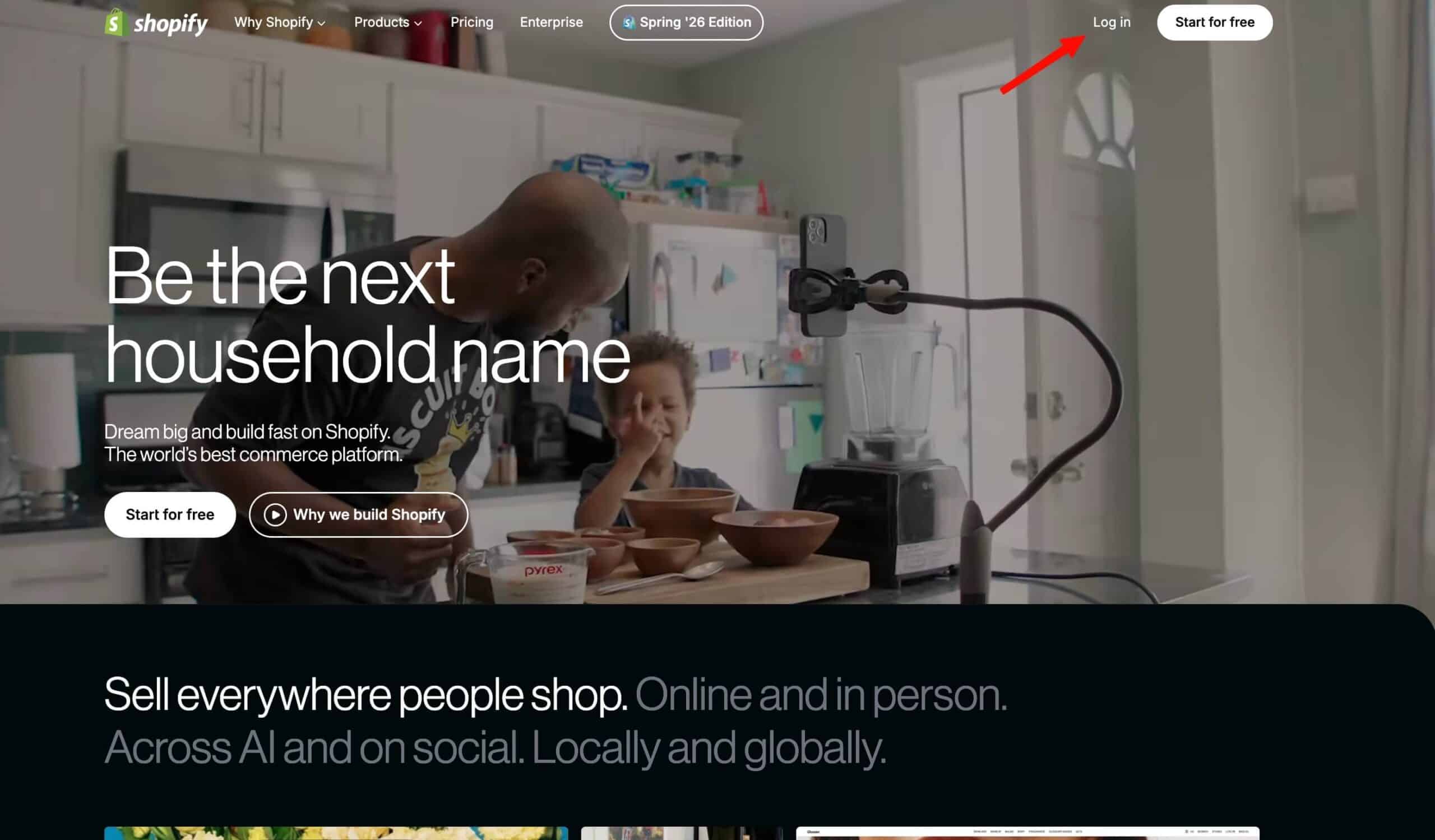
Step 1: Visit the Shopify Partner Portal
Go to https://partners.shopify.com and click the Log In button in the top right corner of the page.
Step 2: Enter Your Partner Account Credentials
Enter the email address and password associated with your Shopify Partner account. If you have set up a Shopify ID, you can use those credentials here. Shopify ID is a single account that works across the Partner Dashboard, Shopify Admin, and all other Shopify products.
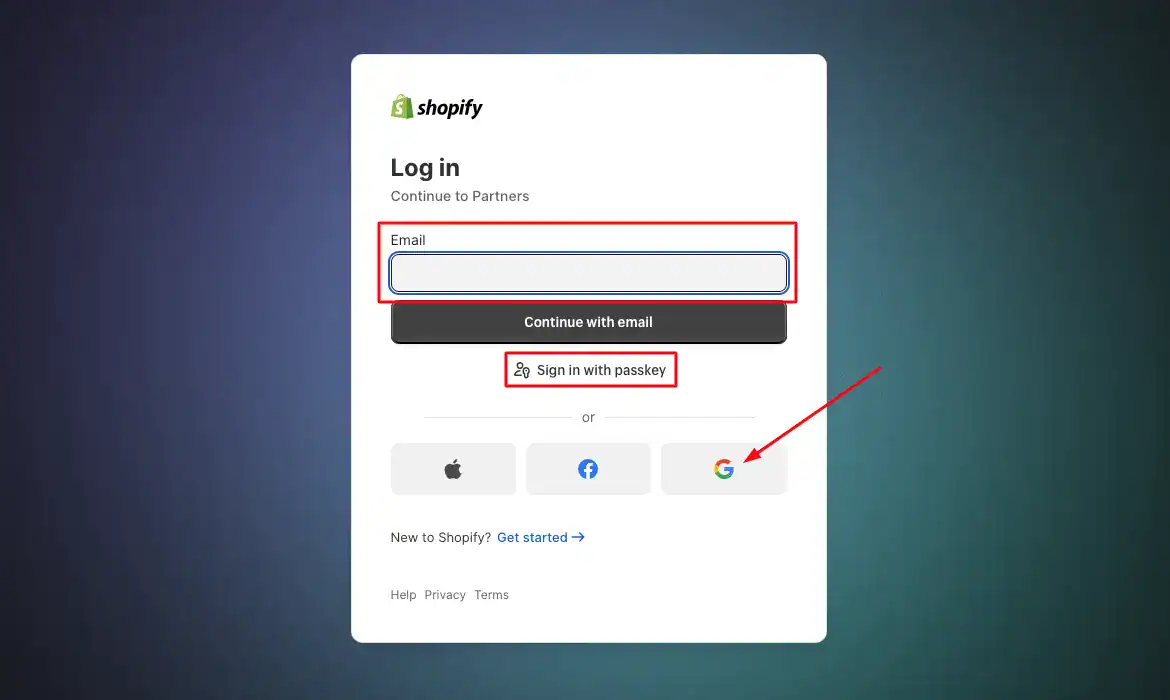
Step 3: Complete Two-Factor Authentication
If you have 2FA enabled, enter the verification code from your authenticator app. Shopify also supports passkey login via a mobile device, tablet, or FIDO2 hardware security key as an alternative to the SMS or app-based code.
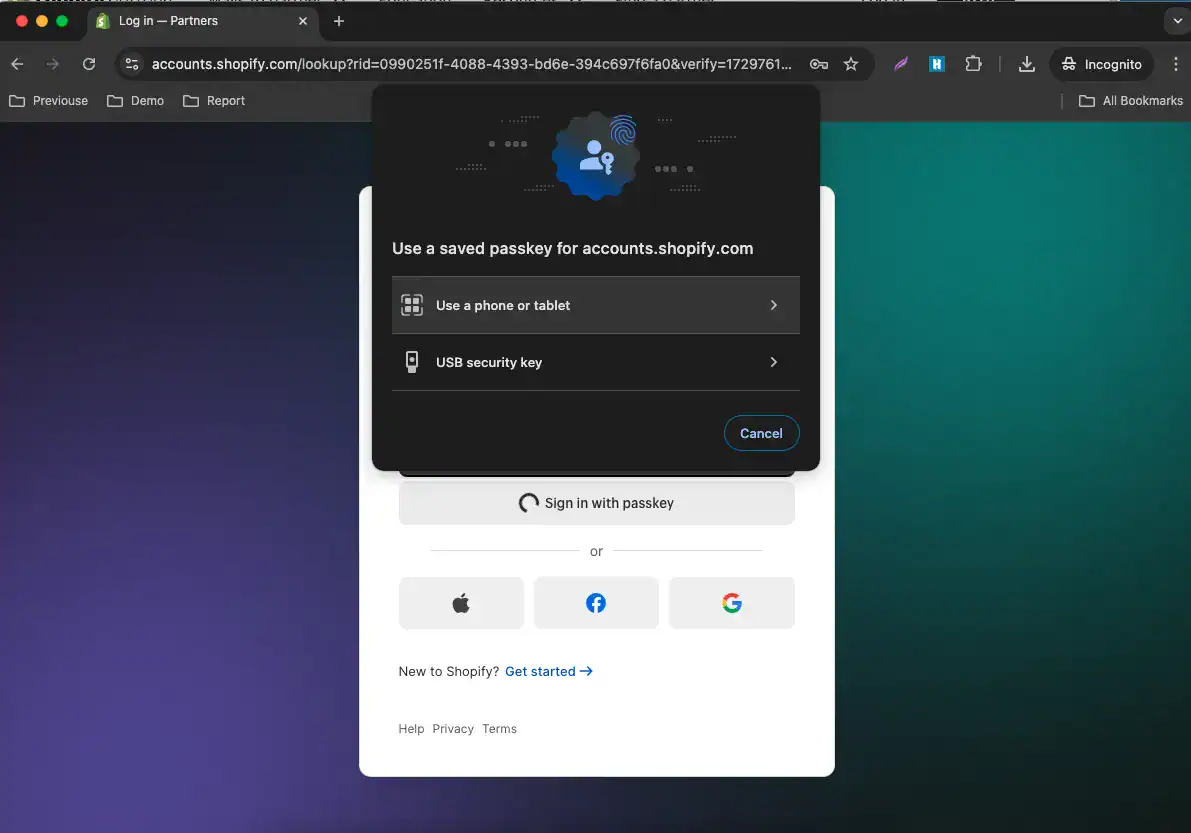
Note: 2FA is also required before you can log in to any client store through your collaborator account. Enable it before requesting store access or your login to client stores will be blocked.
Step 4: Select Your Organization (If Applicable)
If your Shopify ID is linked to multiple partner organizations, Shopify prompts you to select which organization to enter after login. Select the correct one to access its specific dashboard, stores, and earnings data.
Step 5: Access Your Shopify Partner Dashboard
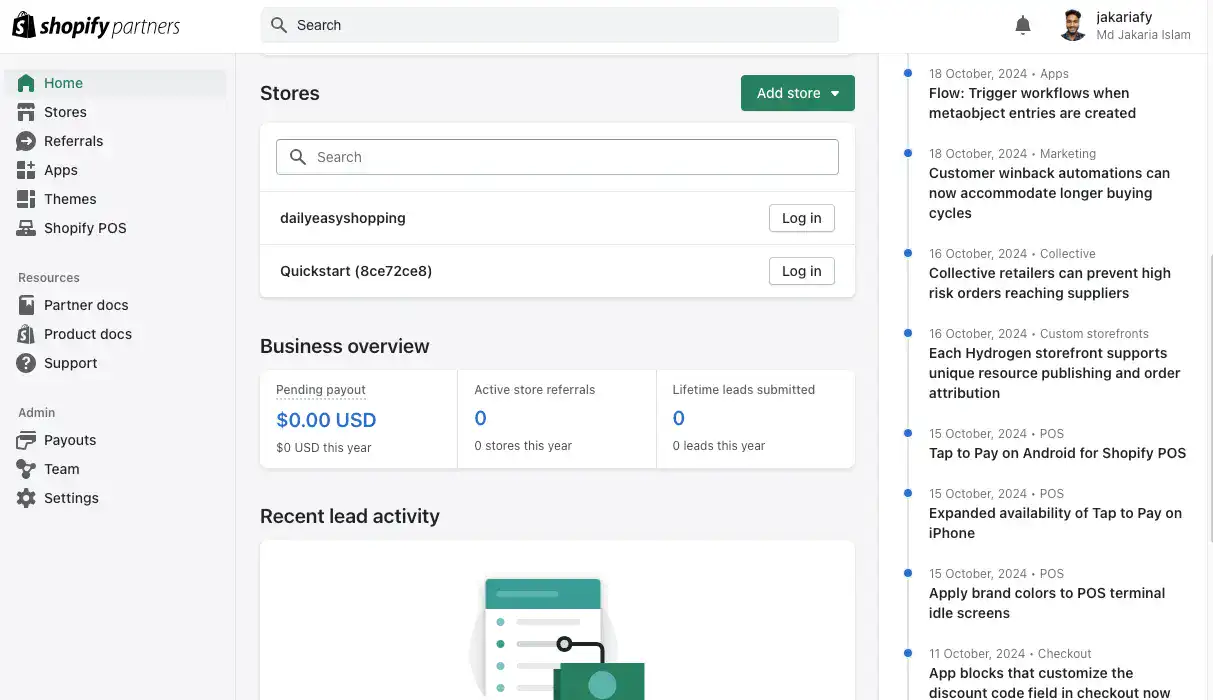
After authentication, you are in the Partner Dashboard. From here you can manage your apps, themes, referrals, payouts, and all the Shopify stores you have collaborator access to.
What is a Shopify Collaborator Account?
A Shopify Collaborator Account lets developers, freelancers, or agencies access a merchant’s store without the store password. The store owner controls exactly which sections of the store the collaborator can see and edit.
For example, a Shopify expert hired to redesign a store’s product pages would request collaborator access to the theme editor and products sections only. They would not see orders, customer data, or payment settings unless the owner explicitly grants those permissions.
Key fact: Collaborator accounts do not count toward the store’s staff account limit. A store on the Basic plan (2 staff accounts) can have multiple active collaborators without hitting the limit.
Common tasks partners handle through collaborator access include Shopify store design, setting up product banners, building shoppable lookbooks, adding Instagram feed galleries, configuring Slider Revolution sections, and resolving technical issues with the theme code.
How to Request Store Access as a Collaborator
As a partner or freelancer, you request access to a client’s store through your Partner Dashboard. Your client must share their 4-digit collaborator code with you before you submit the request.
Step 1: Log In and Go to Stores
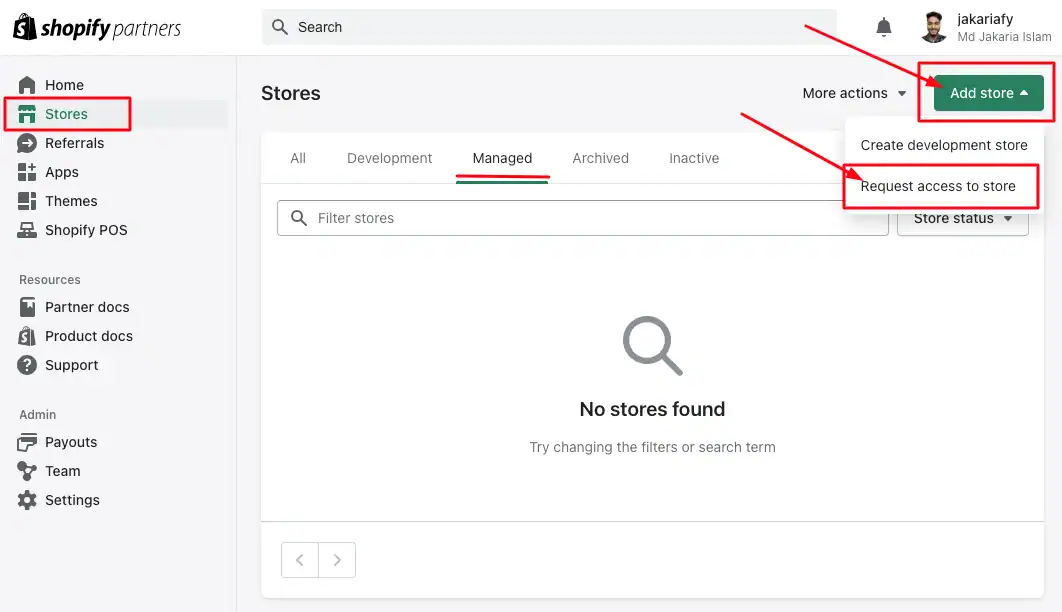
Log in to your Shopify Partner Dashboard and click Stores in the left sidebar.
Step 2: Add Store and Request Access
Click the Add Store button, then select Request Access to Store from the options that appear.
Step 3: Enter the Store URL and Collaborator Code
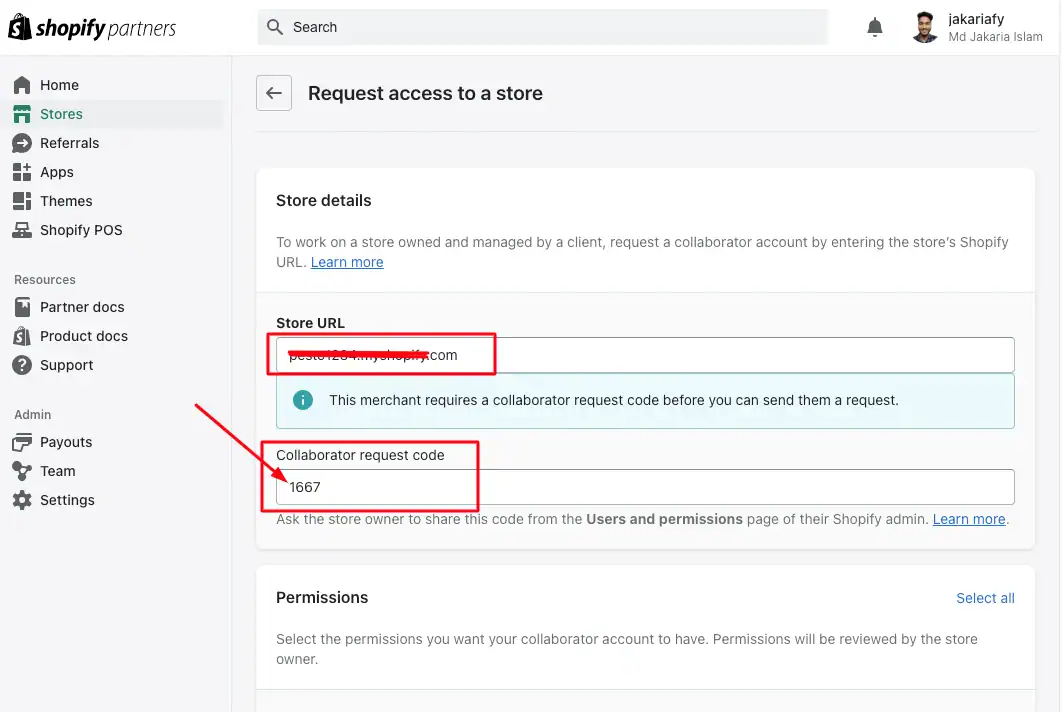
Enter your client’s store URL and the 4-digit collaborator code they shared with you. Without the correct code, you cannot submit the request.
Step 4: Select the Permissions You Need
A full list of store sections appears. Mark only the sections you actually need for the project. Requesting fewer permissions increases the chance of quick approval and builds trust with the client.
For example, a partner setting up image carousels and theme sections would request Themes and Online Store access. A partner building an optimized product store layout would also request Products.
Step 5: Write a Personalized Message and Submit
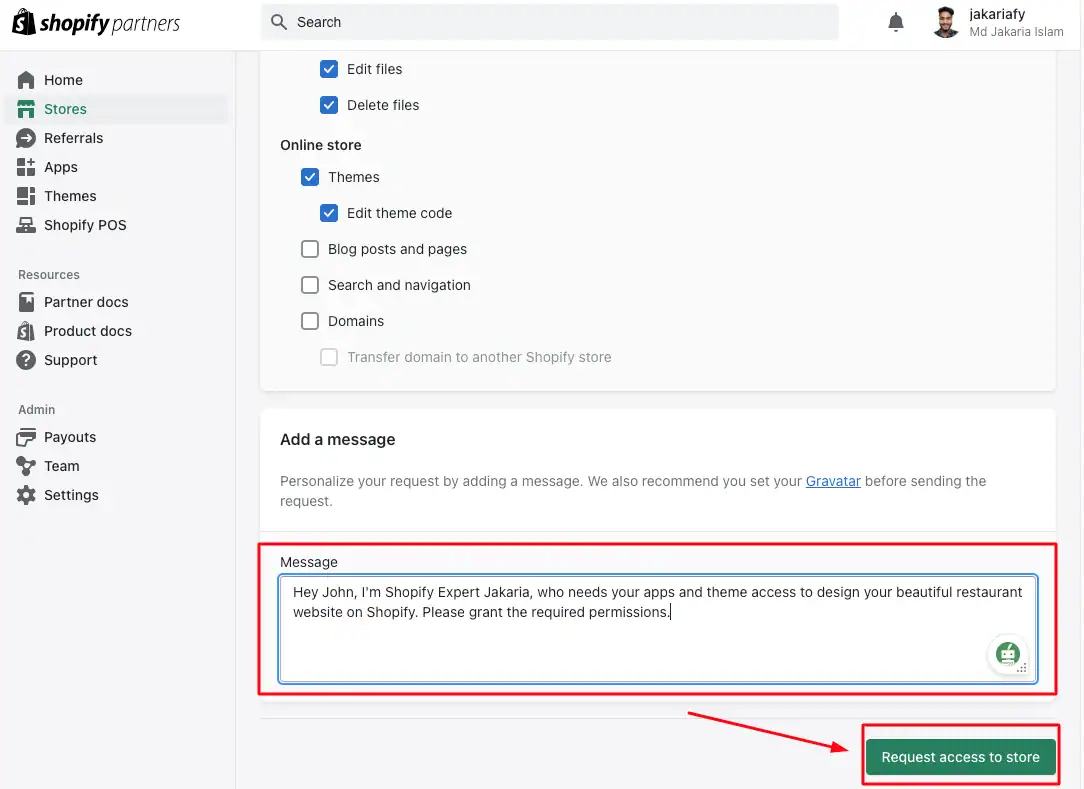
Add a brief message explaining who you are and what you plan to work on. Then click Submit Request.
Step 6: Wait for Client Approval
Your client receives a notification that you have requested access. You cannot proceed until they approve.
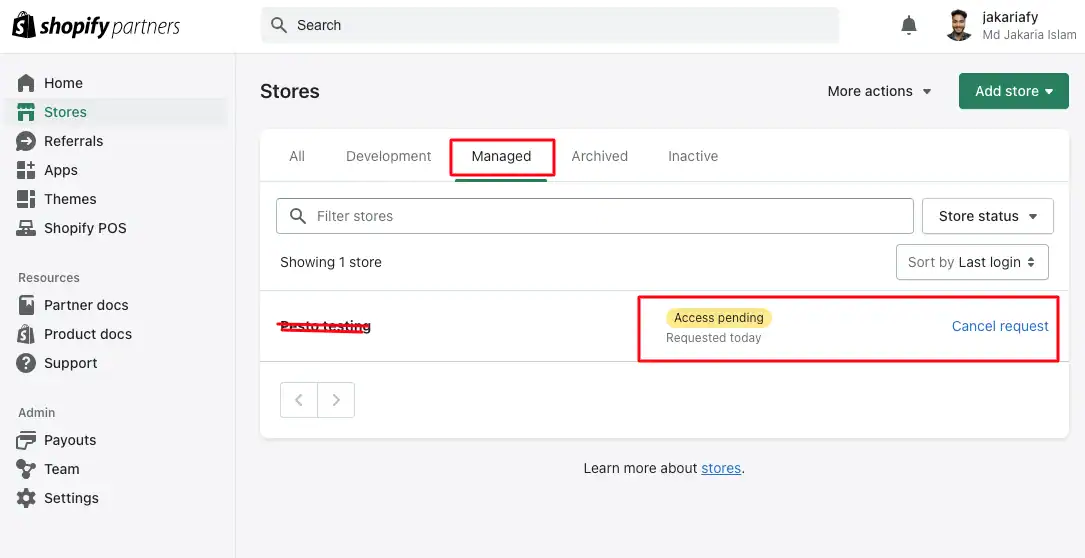
Step 7: Log In to the Client’s Store
Once approved, the store appears in your Partner Dashboard with a Collaborator Access status. Click Login to enter the store.
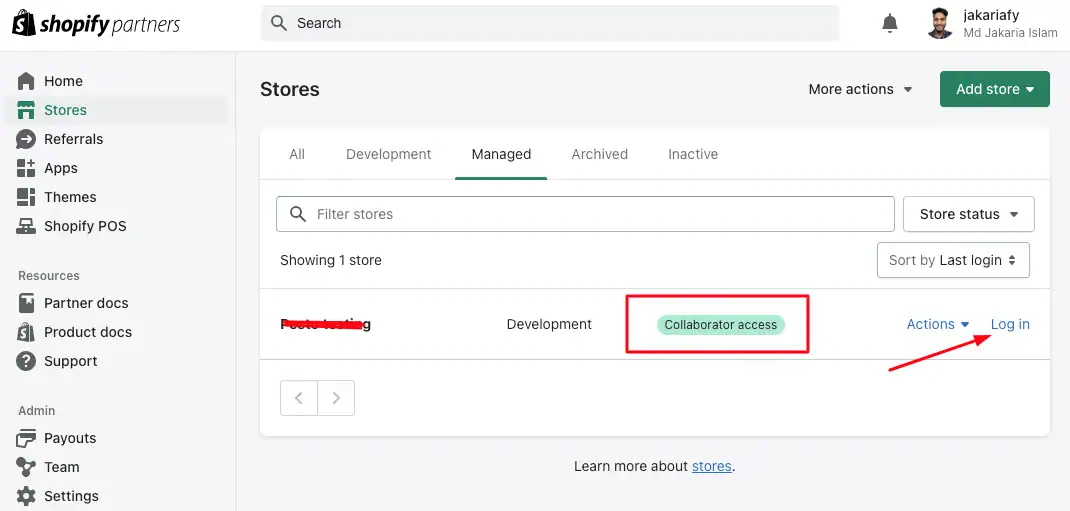
Note: If you have not enabled 2FA on your Partner account, Shopify will block the login to the client’s store and prompt you to enable it first.
Step 8: Work Within Your Granted Permissions
Inside the client’s store, the sidebar only shows the sections you were granted access to. You cannot see or edit any sections outside your approved permissions.
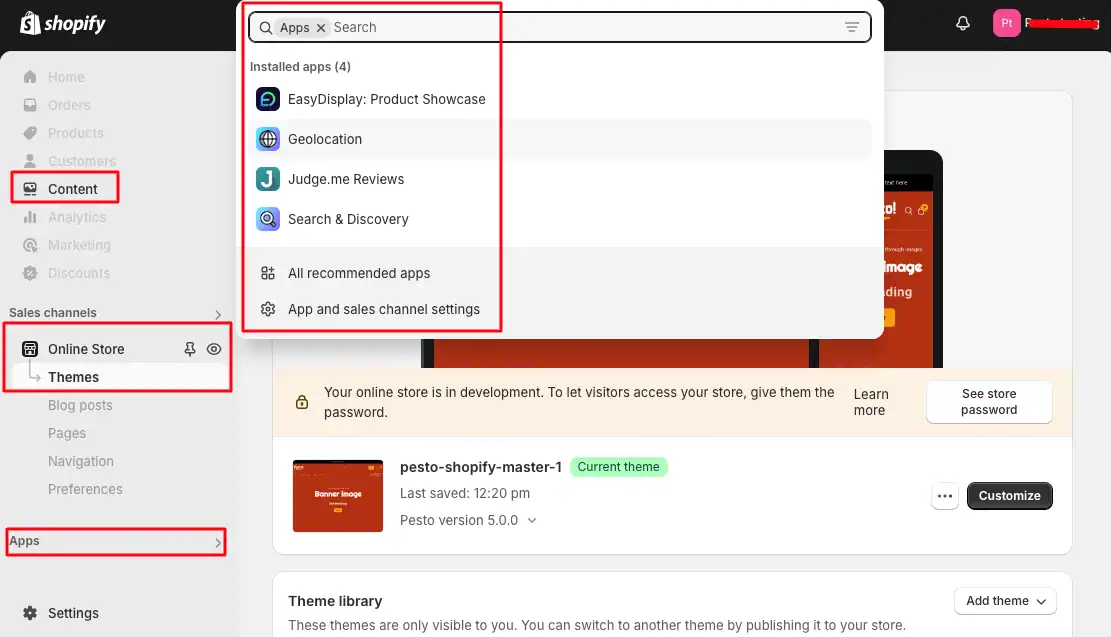
How to Remove a Client Store from Your Partner Dashboard
Once a project is complete, remove the client’s store from your Partner Dashboard. This is a security responsibility on your side of the relationship.
Step 1: Go to Stores in Your Partner Dashboard
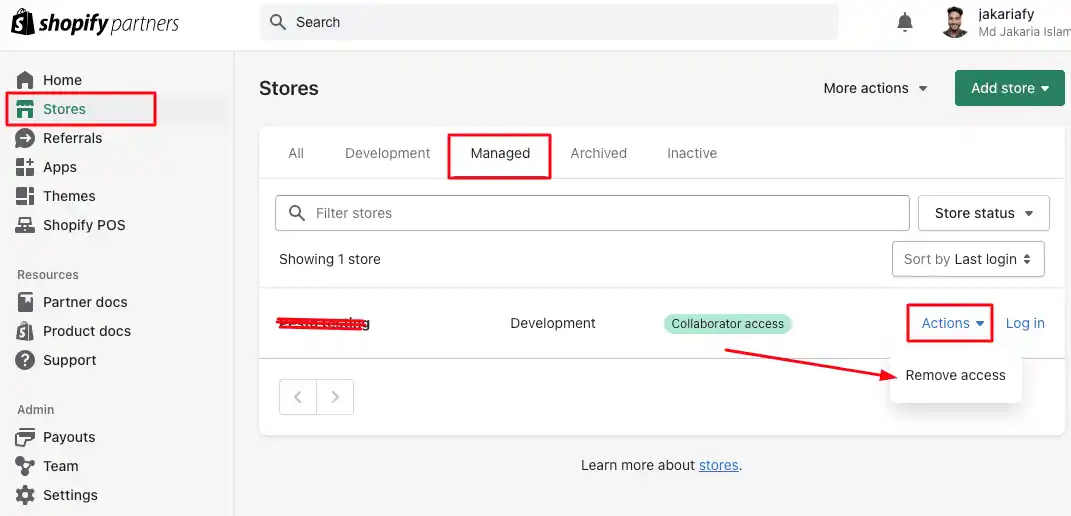
Log in to your Partner Dashboard and click Stores in the left sidebar. Click Managed to filter to client stores only.
Step 2: Click Actions and Select Remove Access
Find the store you want to remove, click the Actions button, and select Remove Access.
Step 3: Confirm the Removal
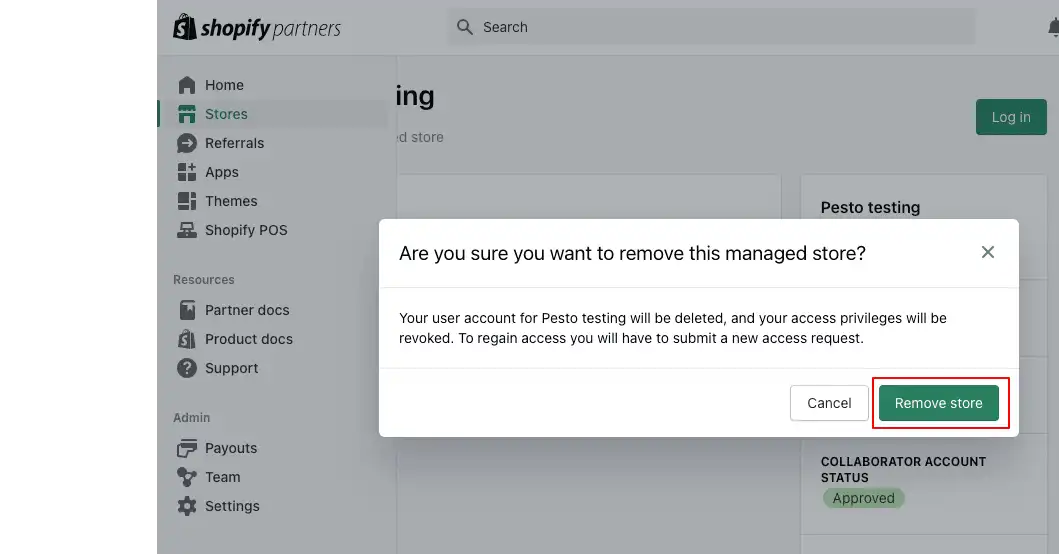
A confirmation dialog appears. Click Remove Store to confirm. The store is immediately removed from your dashboard and you no longer have access to it.
How to Grant Collaborator Access as a Store Owner
As a store owner, you control who gets collaborator access and what they can see. The process starts with generating a collaborator code to share with your partner or freelancer.
Step 1: Log In to Your Store Dashboard
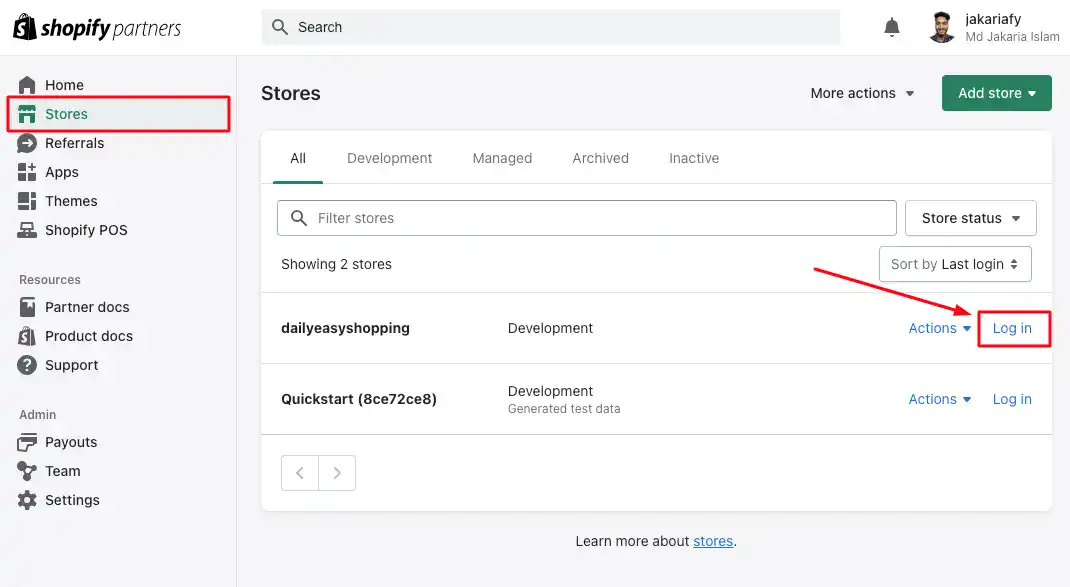
Log in to your Shopify Partner Dashboard, go to Stores, and click Login on the store where you want to grant access.
Step 2: Go to Settings and then Users and Permissions
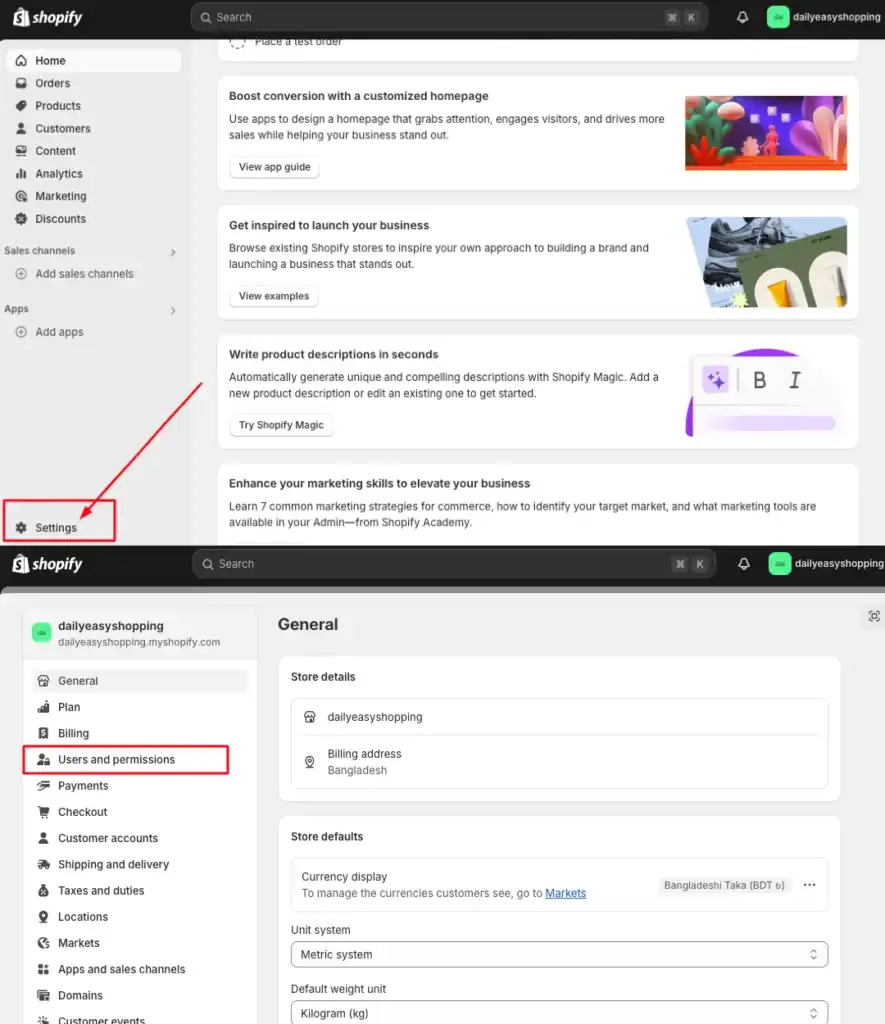
In the store admin, click Settings in the bottom left corner, then select Users and Permissions.
Step 3: Scroll to the Collaborators Section
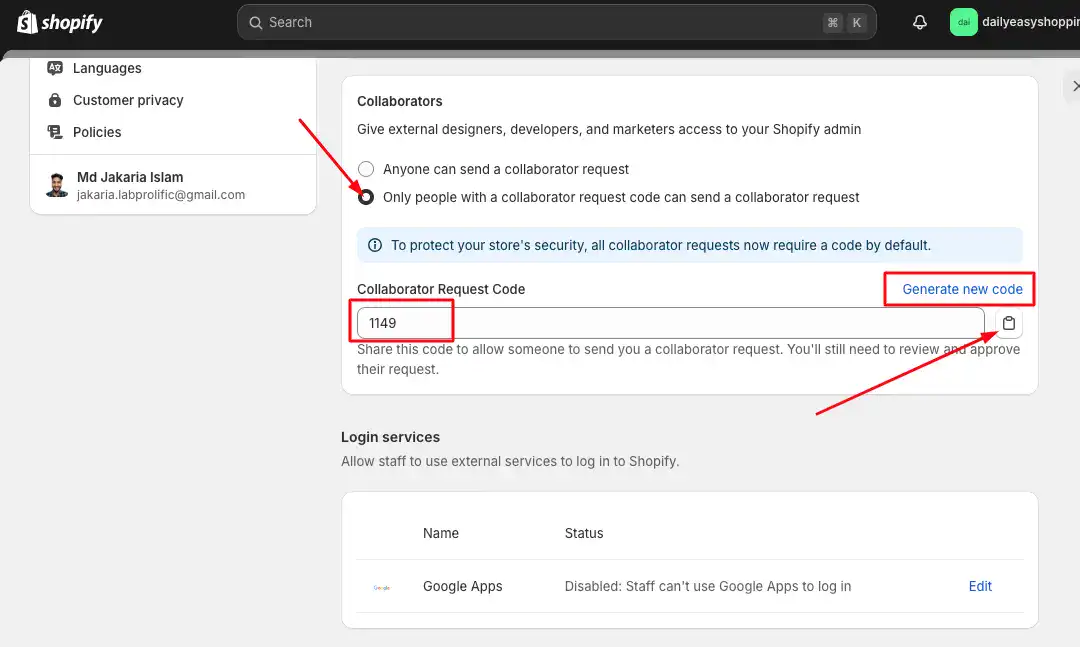
Scroll down to find the Collaborators section. You will see two options: allow anyone to send a request, or require a collaborator code. Keep the second option enabled for security. Only partners with your code can submit a request.
Step 4: Generate a New Collaborator Code and Share It
Click Generate New Code. A 4-digit code is created. Share this code with your freelancer or agency so they can submit their access request. Each code can be used once.
Step 5: Wait for the Collaborator to Submit Their Request
Your collaborator uses the code to submit their access request from their Partner Dashboard.
Step 6: Reload the Page to See the Pending Request
Once the collaborator submits their request, reload the Users and Permissions page. Their account appears under Collaborators with an Account Pending status. Click their name to review the request.
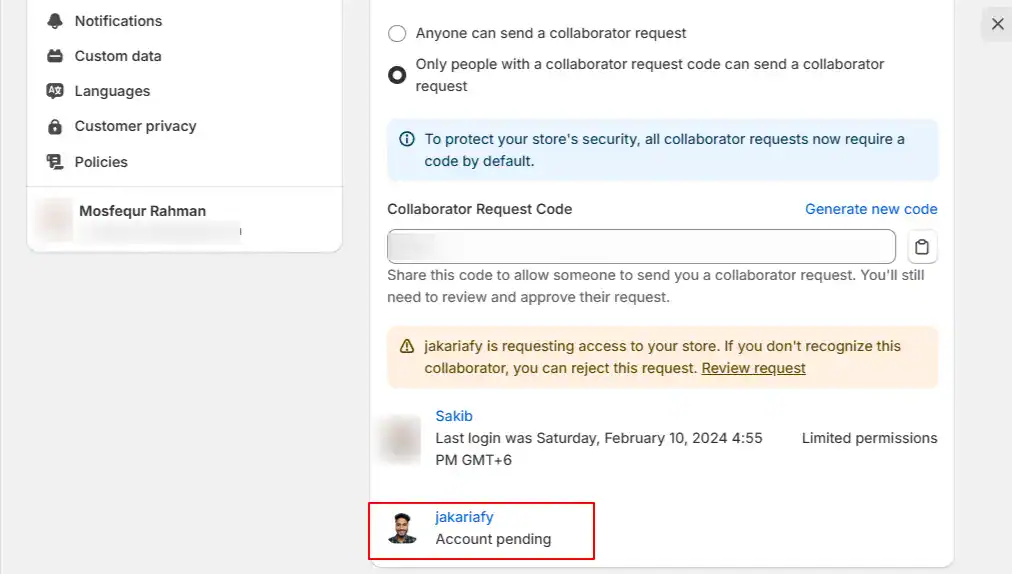
Step 7: Review and Adjust Permissions
Carefully review which sections the collaborator has requested. Uncheck any sections you do not want them to access. You can modify permissions at any time after granting access.
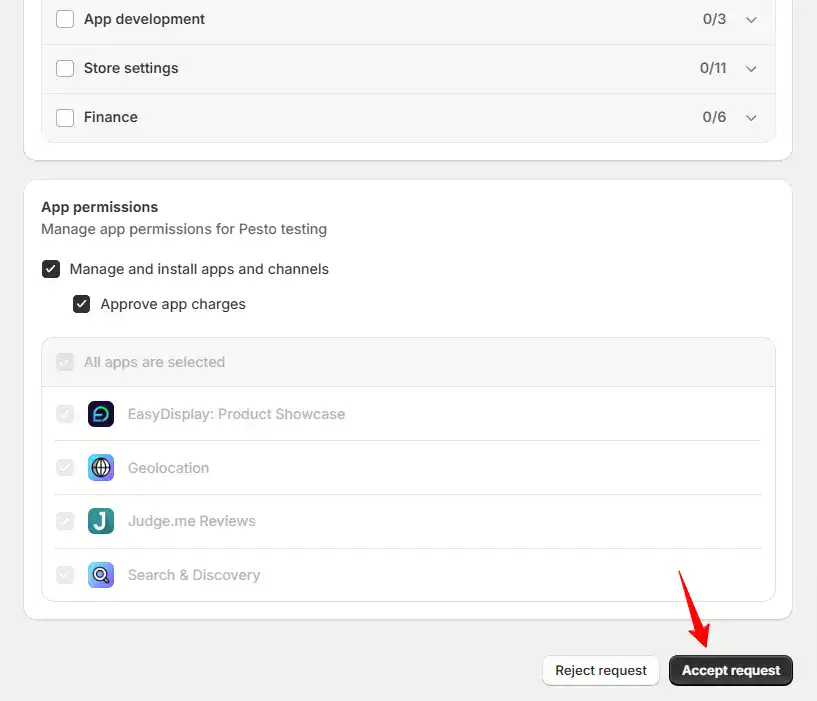
Step 8: Accept the Request
Click Accept Request. The collaborator now has access to the sections you approved and can log in to your store from their Partner Dashboard.
How to Remove a Collaborator from Your Store (Store Owner)
Remove collaborator access as soon as the project is complete. Do not leave active collaborator accounts that are no longer needed.
Step 1: Go to Settings and then Users and Permissions
In your store admin, go to Settings > Users and Permissions and scroll to the Collaborators section. Click the collaborator’s name to open their profile.
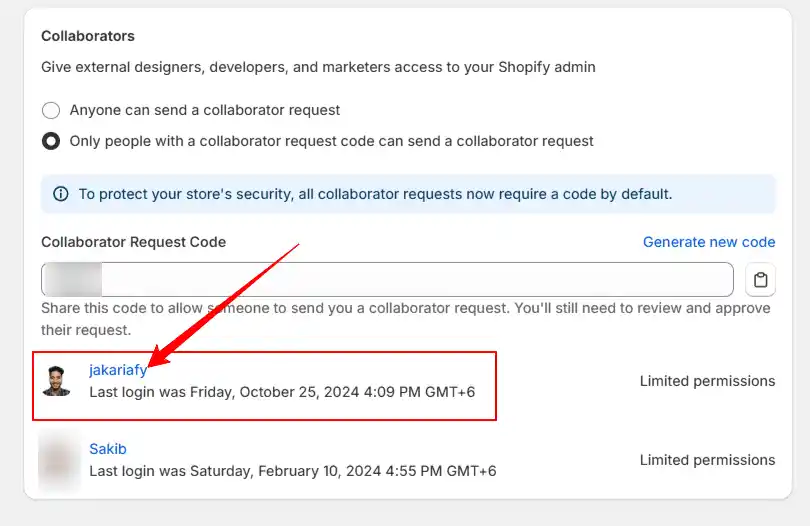
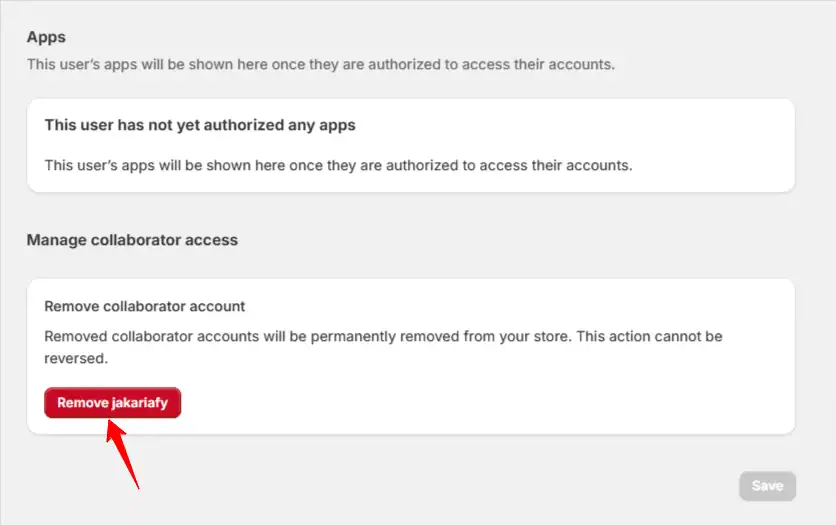
Step 2: Scroll Down and Click Remove
Scroll to the bottom of the collaborator’s profile and find the Manage Collaborator Access section. Click the red Remove [collaborator name] button.
Step 3: Confirm with Your Store Password
Shopify asks you to enter your account password to confirm the removal. Enter it and click Remove. The collaborator is immediately removed from your store.
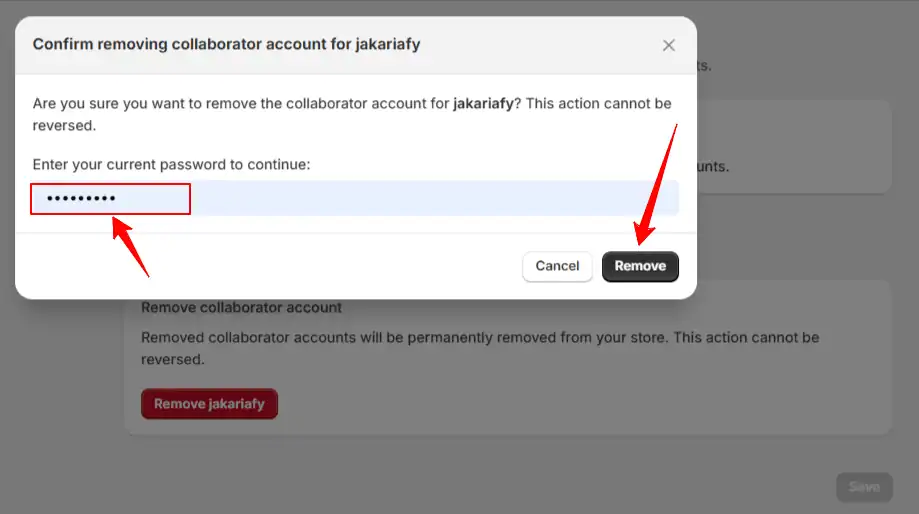
To confirm the removal, reload the Users and Permissions page and check the Collaborators section. The account will no longer appear.
Common Shopify Partner Login Issues and Fixes
Forgotten email or password
Use the Forgot Password link on the login page. Enter your registered email and Shopify sends a password reset link. If you have forgotten which email is registered, check your inbox for any previous Shopify partner email (billing receipts, payouts, or partner program communications).
Browser blocking login (cache or cookie issue)
Clear your browser cache and cookies, then try again. If that does not work, try an incognito or private window. If login succeeds in incognito mode, a browser extension is likely interfering. Try disabling extensions (particularly ad blockers or privacy extensions) and logging in normally.
Not receiving the 2FA verification code
Check that your device or email is active and connected. If using an authenticator app, confirm the time on your device is synced correctly (authenticator codes are time based and fail if your device clock is off by more than 30 seconds). If using SMS, request the code again after 60 seconds. Switch to an authenticator app if SMS delivery is consistently unreliable.
Account locked after multiple failed login attempts
Wait 30 minutes before trying again. Shopify temporarily locks accounts after repeated failed attempts as a security measure. Check your email for a notification from Shopify that may include an unlock link or instructions. If the account is suspended due to a terms of service violation, contact Shopify Partner Support directly.
Login page loads but Partner Dashboard is inaccessible or shows errors
Check shopifystatus.com for any active incidents or maintenance windows affecting the Partner Dashboard. If there is an active outage, wait for Shopify to resolve it. If the status page shows no issues but the problem persists, try a different browser or device.

Security Best Practices for Shopify Partner Accounts
Partner account security matters more than personal account security because a compromised partner account gives an attacker access to every client store you have collaborator access to.
Enable 2FA on your Partner account immediately
Use an authenticator app (Google Authenticator, Authy) rather than SMS. SMS codes can be intercepted through SIM swapping attacks. 2FA is also required before Shopify allows you to log in to client stores, so this is both a security measure and an operational necessity.
Use a unique strong password not shared with any other account
A password manager (1Password, Bitwarden) handles this automatically. Never reuse your Shopify Partner password across other services. If any other service you use suffers a data breach, a reused password gives attackers access to your partner account and all associated client stores.
Remove client stores immediately after project completion
Active collaborator accounts on stores where you are no longer working are a security liability. Audit your Stores list quarterly and remove any stores with completed or inactive projects. This is your responsibility as the partner, not the store owner’s.
Never share your Partner account credentials with team members
Each team member who needs Partner Dashboard access should create their own Shopify Partner account. Shared credentials make it impossible to track who made which changes to a client store and eliminate individual accountability. Add team members to your partner organization as staff, not as secondary credential holders.
Request only the store permissions you actually need
Requesting full store access when you only need the theme editor is unnecessary and makes clients less comfortable approving requests. Scoped permissions also limit the damage if your partner account is ever compromised. For example, a partner doing theme animation work only needs Online Store and Themes access, not Orders, Customers, or Payments.
Frequently Asked Questions
What is the Shopify Partner Dashboard?
The Shopify Partner Dashboard (partners.shopify.com) is the management hub for Shopify developers, designers, agencies, and affiliates. From it, you manage your apps, themes, referral programs, payout history, development stores, and collaborator access to client stores. It is separate from the Shopify store admin used by merchants.
What is Shopify ID and how does it relate to Partner login?
Shopify ID is Shopify’s unified login system. One Shopify ID works across the Partner Dashboard, Shopify Admin, and all other Shopify tools. If you created your Partner account before Shopify ID launched (late 2024), you may be prompted to migrate your account to Shopify ID. Once migrated, you use the same credentials everywhere in the Shopify ecosystem.
Can I access multiple client stores from one Shopify Partner account?
Yes. Your Partner Dashboard maintains a list of all stores you have collaborator access to under the Stores section. You can switch between client stores from the dashboard without logging out. Each store shows as a separate entry, and your access to each is controlled by the permissions that specific store owner granted.
What is a Shopify collaborator account?
A Shopify collaborator account lets a Shopify partner (developer, freelancer, or agency) access a merchant’s store without the store password. The store owner controls exactly which sections the collaborator can see and edit. Collaborator accounts do not count toward the store’s staff account limit and can be revoked by either party at any time.
Do I need a Shopify Partner account to access a client’s store?
Yes, collaborator access requires an active Shopify Partner account. You cannot request collaborator access using a standard Shopify customer or staff account. Signing up for a Shopify Partner account is free at partners.shopify.com. Once registered, you can build your profile as a Shopify expert and start taking on client work.
Build Better Shopify Stores for Your Clients
ShopiDevs builds apps and themes used by Shopify partners worldwide. Slider Revolution, Essential Grid Gallery, and EasyBoost are all available on the Shopify App Store.

Jakaria is an SEO Content Writer in Shopify, Ecommerce, WordPress, and Tech Industry with 5+ years of experience. He specialises in developing engaging, helpful content by simplifying complex topics into an amazing story for B2B, SaaS, and Shopify businesses. He’s also passionate about staying updated on growth marketing strategies and Shopify trends.