
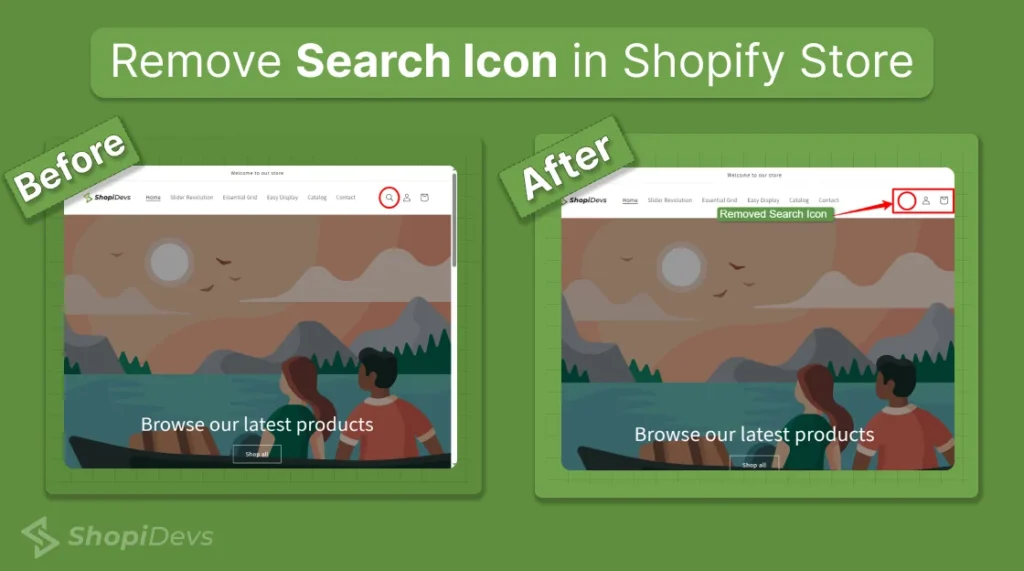
Every element in your online store should serve a purpose and for some brands, a search bar does more harm than good.
If you run a one-product store or simply don’t need a search feature, that default magnifying glass icon is just adding unnecessary clutter.
Fortunately, getting rid of it is simpler than you think.
In this quick guide, we will discuss exactly how to remove the search icon from your Shopify store in less than five minutes.
Quick Answer
Fastest method (CSS, reversible): Go to
Online Store > Themes > Edit code > Assets > base.css.
Scroll to the bottom and add:
.header__icon--search { display: none; }
then click Save. Done in under 2 minutes.
Permanent removal: Edit Sections > header.liquid and delete the search render block. Requires a theme backup first.
Mobile only: Add a media query to base.css targeting
max-width: 767px. Hides on phones, stays visible on desktop.
Works on: Dawn, Debut, Sense, Refresh, and any Online Store 2.0 Shopify theme.
Key Takeaways
-
The CSS method (
display: none) hides the search icon without touching Liquid code. It is fully reversible and safe for any skill level. - The code deletion method removes the icon permanently by editing header.liquid. Always back up your theme first.
-
In the Dawn theme, the search icon class is
.header__icon--searchin base.css. - You can hide the search icon on mobile only by adding a media query targeting screens under 767px wide.
- Removing the icon with CSS does not disable the Shopify search function. Customers can still reach /search directly.
Why Merchants Remove the Shopify Search Icon
Not every Shopify store needs a header search icon. Stores with a single product have nothing meaningful for customers to search. Minimalist brand designs prioritize whitespace over utility icons. Some merchants replace the icon with a full inline search bar for better UX. Others simply want a cleaner header layout on mobile, where the search icon competes with the logo and cart.
Whatever your reason, Shopify gives you three clean ways to handle it. The right method depends on whether you want a reversible tweak or a permanent change.
Here are a few situations where removing the Shopify store search icon makes sense:
- One-Product Stores – When you have only one product on your Shopify store, you can remove the search icon.
- Single Page Store – When everything is on the homepage (one page), search isn’t needed here.
- Minimal Design Preferences – If you prefer a clean layout on your Shopify store, it looks better without extra icons like the search icon.
- Enough Alternative Navigation – Already, you have organized products using menu, sub-menu, collections, tags, Shopify sub collections, etc, then the search icon could be removed.
- Custom Navigation or AI Search – You are using advanced tools or apps for product discovery. Once AI search or recommendations using apps are in place, the search icon may not be needed.
Before you remove the icon, check whether your customers actually use search. If search drives conversions, hiding it could hurt sales. Consider whether the icon is the problem, or whether the search experience itself needs improvement.
How to Remove the Search Icon in Shopify – 2 Easy Methods
You can remove the search icon by following the 2 different methods I have provided below. Both are 100% safe to implement on your Shopify store and won’t affect the theme file. However, having a backup gives you peace of mind while changing your theme code.
Prerequisite: Back Up Your Theme Before Editing Code
Any time you edit theme files, you risk breaking something. A single misplaced character in base.css or header.liquid can take down your entire storefront header. Before you touch any code, create a theme backup.
In Shopify, you can duplicate your theme manually. Go to Online Store > Themes, click the three-dot menu next to your active theme, and select Duplicate. Shopify saves a copy you can restore instantly if anything breaks.
For automated backups, Syncora is the Shopify app built for this. It backs up your entire store automatically so you are never one edit away from a broken store.
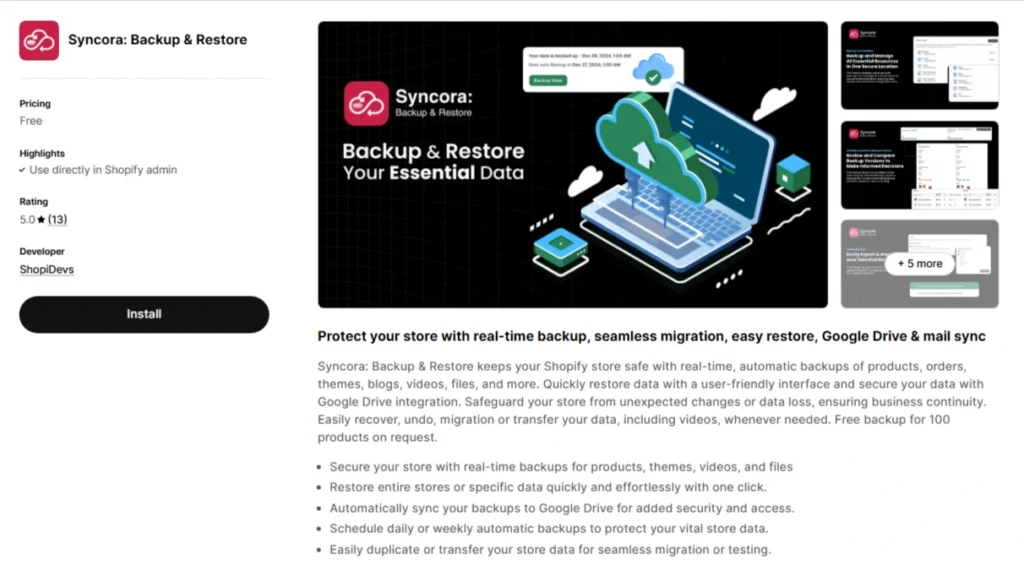
Syncora: Backup & Restore
Automatically back up your Shopify theme, products, and store data. Restore with one click if anything breaks. Essential before any code edit.

Method 1: Hide the Search Icon in Shopify by Adding CSS Code
Let’s dive into the ultimate guide to removing the search icon from your Shopify store.
“Hide the Search Icon with CSS” is the safest approach. You add a single CSS rule to base.css that hides the icon visually. The underlying Liquid code stays untouched, so you can undo it in seconds by deleting the one line you added. No code knowledge required beyond copy-paste.
Important
This method hides the icon visually but does not remove the search functionality. Customers can still reach your search page by going to /search. If you want to disable search entirely, use Method 2.
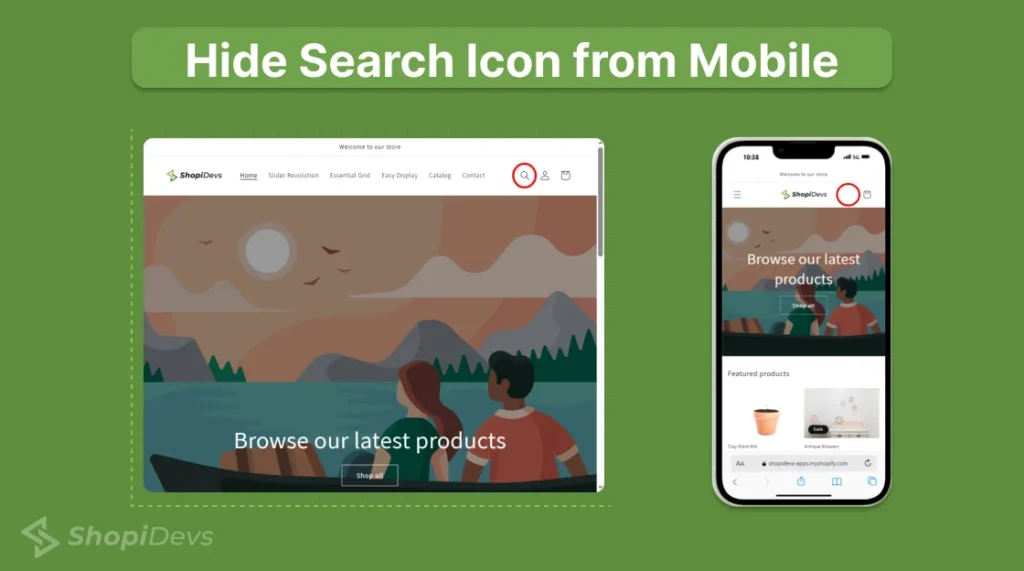
Step 1: Open the Shopify Theme Code Editor
- Log in to your Shopify store admin dashboard.
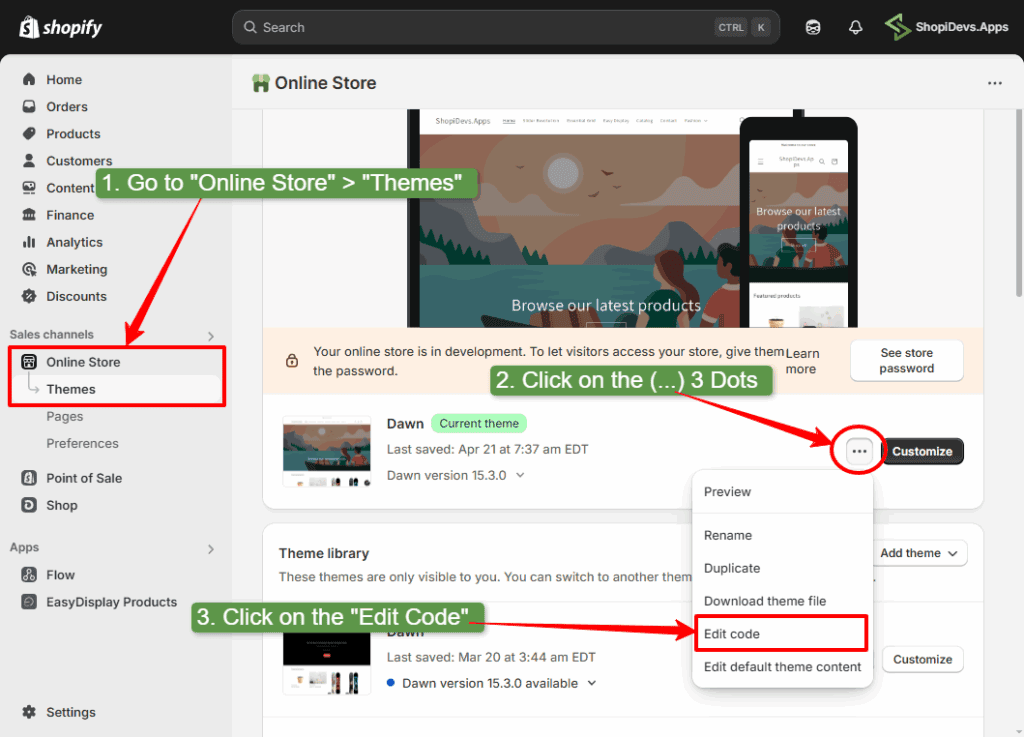
- Click on the “Online Store > Themes > 3 Dots > Edit Code”
This opens the theme code editor where you can safely edit CSS and Liquid files.
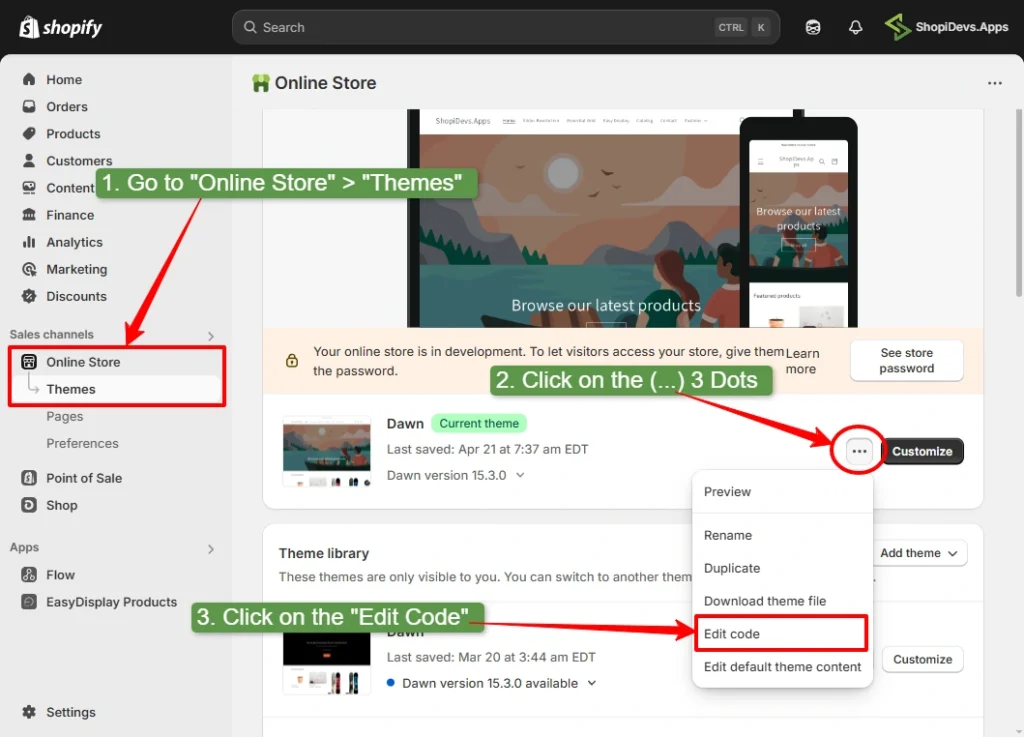
Step 2: Open base.css in the Assets Folder
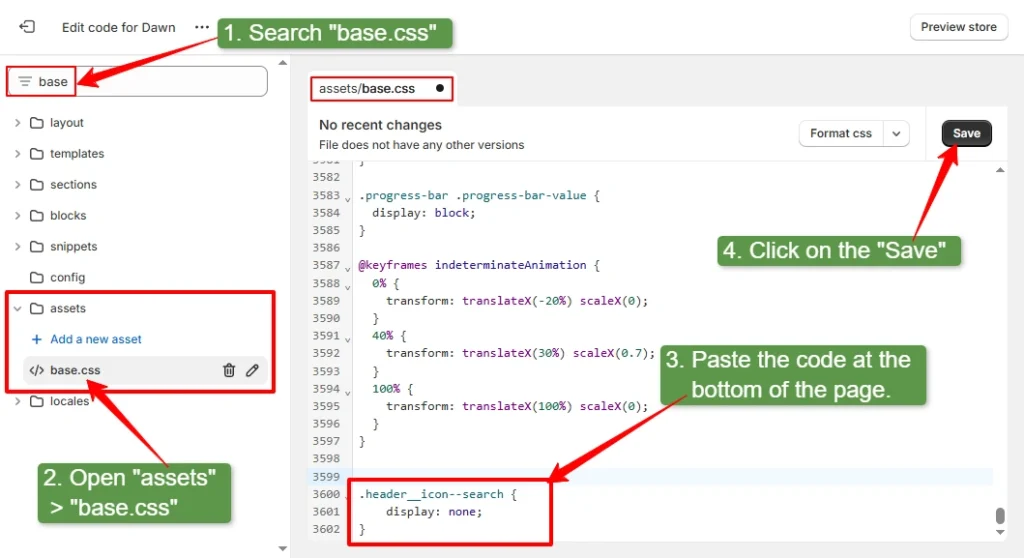
In the left sidebar, find the Assets folder and click on base.css. This is the main stylesheet for your Shopify theme. It controls how all elements on the storefront look, including the search icon in the header.
Step 3: Add the CSS Code at the Bottom
Scroll to the very bottom of the base.css file. On a new line, paste this CSS:
.header__icon--search {
    display: none ;
}Click the Save button in the top-right corner of the editor.
Note: if this code is not working, you can use display: none! important; to prioritize the display none tag.
Step 4: Verify on Your Storefront
Open your store in a new browser tab. The search icon should no longer appear in the header. To undo the change at any time, go back to base.css and delete the CSS rule you added.
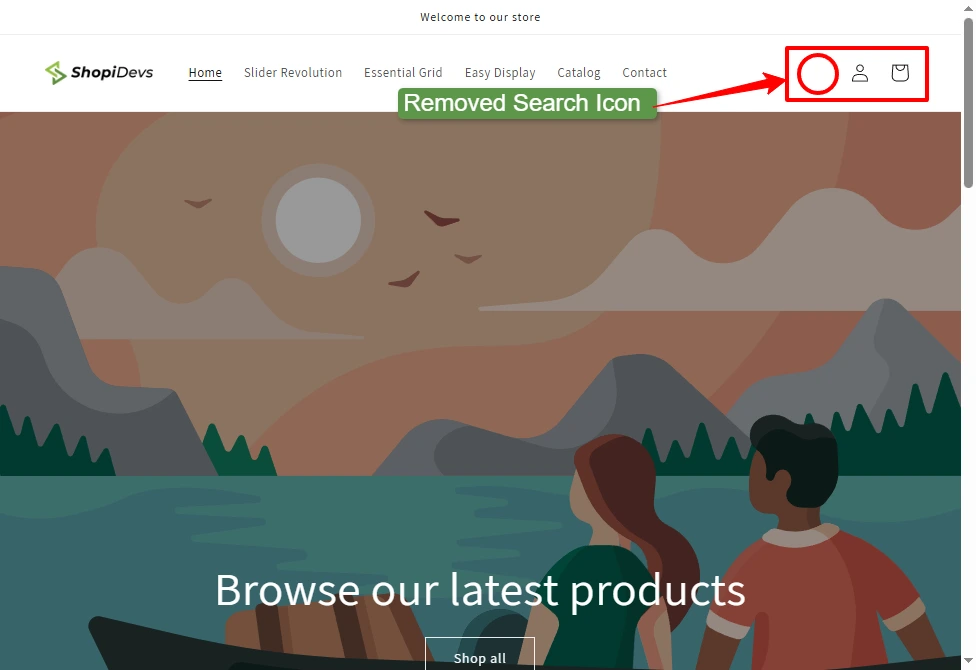
Note: You can safely hide the search icon by adding the CSS code provided in this method. This method is non-destructive and won’t affect your store’s functionality. If you prefer a more permanent solution by removing the code entirely, continue to the next method.
Method 2: Remove the Search Icon by Deleting the Responsible Code
If you want a permanent removal and are comfortable editing Liquid files, this method deletes the search icon render tag directly from the header template. Unlike the CSS method, you are removing the code itself. This means there is no icon to restore unless you revert to a backup.
Back up your theme before using this method
Editing header.liquid directly is permanent. A mistake here can break your header layout. Duplicate your theme or use Syncora before proceeding.
Step 1: Access Theme Code Editor
- Log in to your Shopify store admin dashboard.
- Click on the “Online Store > Themes > 3 Dots > Edit Code”
You need to access the Sections or Snippets folder depending on your theme.
Step 2: Find and Delete the Search Icon Code
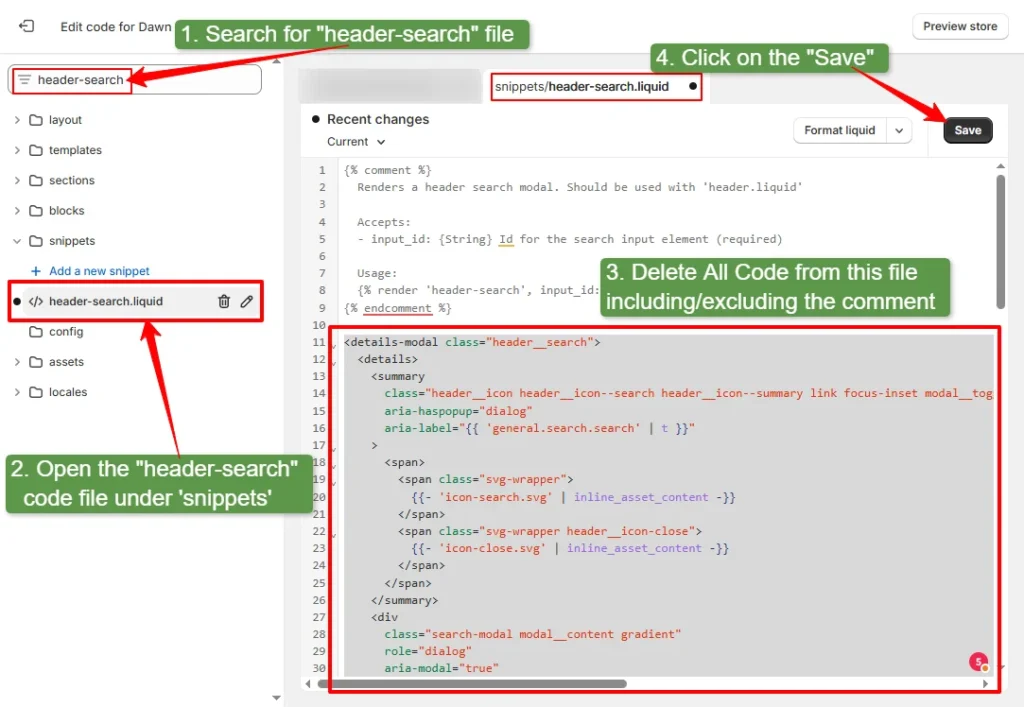
In the code editor search bar, type header-search. Open the file named header-search.liquid under the Snippets folder. Select all the code inside this file and delete it, then click Save.
Important: Do not delete the file itself
Leave the header-search.liquid file in place but with no code inside it. If you delete the file entirely, Shopify will throw a render error at the search icon location. An empty file is the correct result.
Step 3: Save and Verify
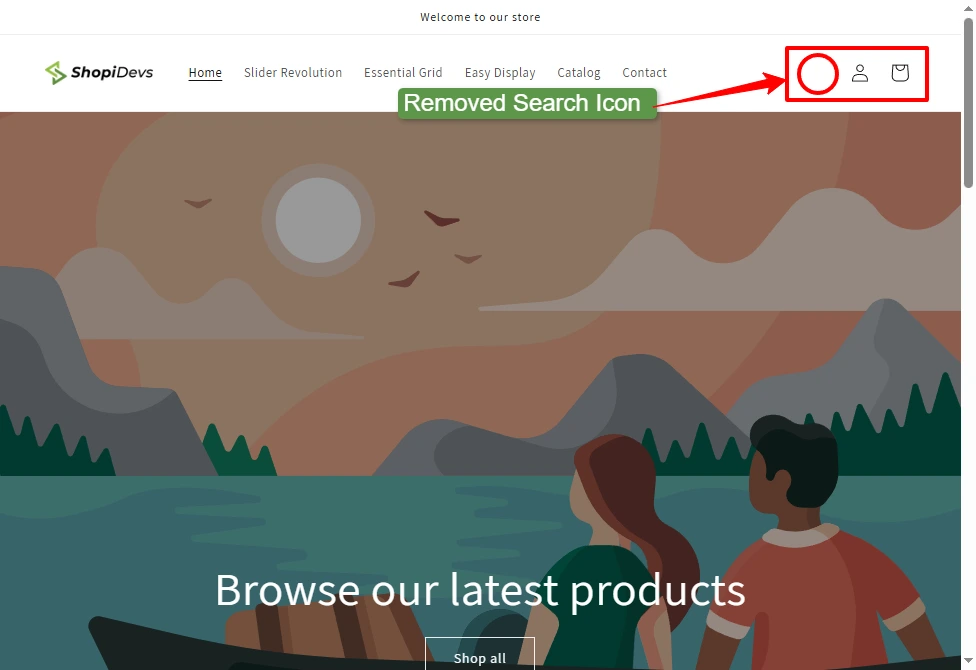
Click Save. Open your storefront in a new tab to confirm the search icon is gone. Both on desktop and mobile, the header should display without a search icon. If your layout breaks, restore from your theme backup immediately.
Which Method Should You Use?
Both methods get the job done. The difference comes down to how permanent you want the removal to be and how comfortable you are editing code files.
| Criteria | CSS Method | Code Deletion |
|---|---|---|
| Reversibility | Fully reversible. Delete one CSS line to restore. | Permanent. Requires a theme backup to undo. |
| Risk level | Low No core files changed. | Medium Liquid file editing. Layout could break. |
| Skill required | Copy-paste. Any experience level. | Basic Liquid template understanding. |
| Search functionality | Icon hidden. Search still works via /search. | Icon and render tag both removed from header. |
| Best for | Most merchants. Clean, safe, quick. | Developers who want zero trace of the icon code. |
| Theme update impact | CSS addition survives most updates. | Theme updates may restore the deleted code. |
For the majority of Shopify merchants, Method 1 (CSS) is the right choice. It is fast, reversible, and does not put your header layout at risk. Only use code deletion if you have a specific reason to remove the Liquid code entirely, and always back up first.
How to Hide the Search Icon from the Mobile Version in Shopify
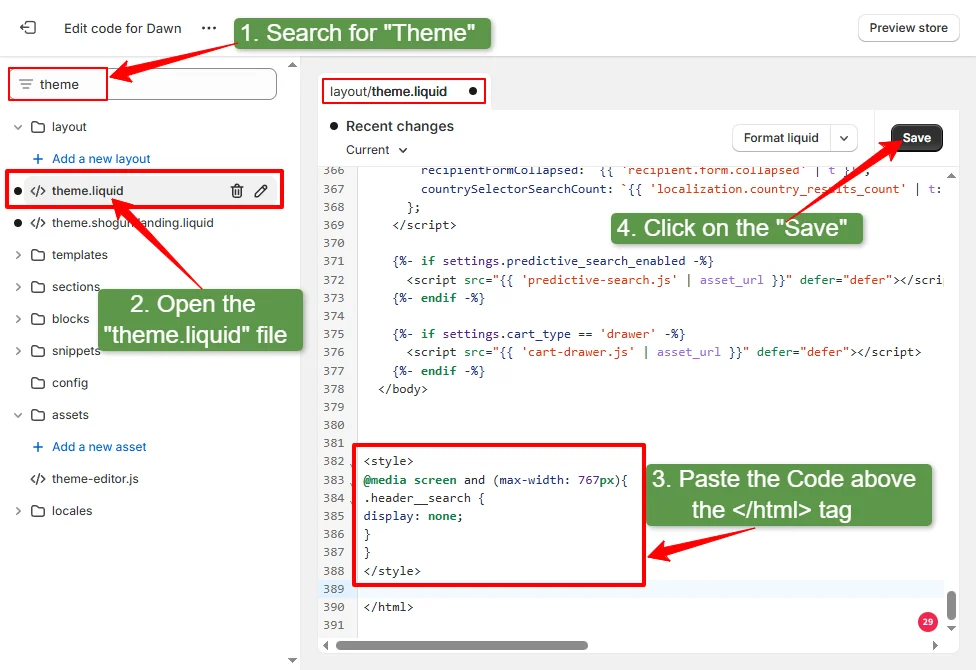
Some stores want the search icon visible on desktop (where there is enough header space) but hidden on mobile (where it crowds the header next to the logo, hamburger menu, and cart). Shopify makes this straightforward with a CSS media query.
To do that:
Step 1: Open the Shopify Theme Code Editor
Go to Online Store > Themes > Edit code. This time you will be editing theme.liquid in the Layout folder, not base.css.
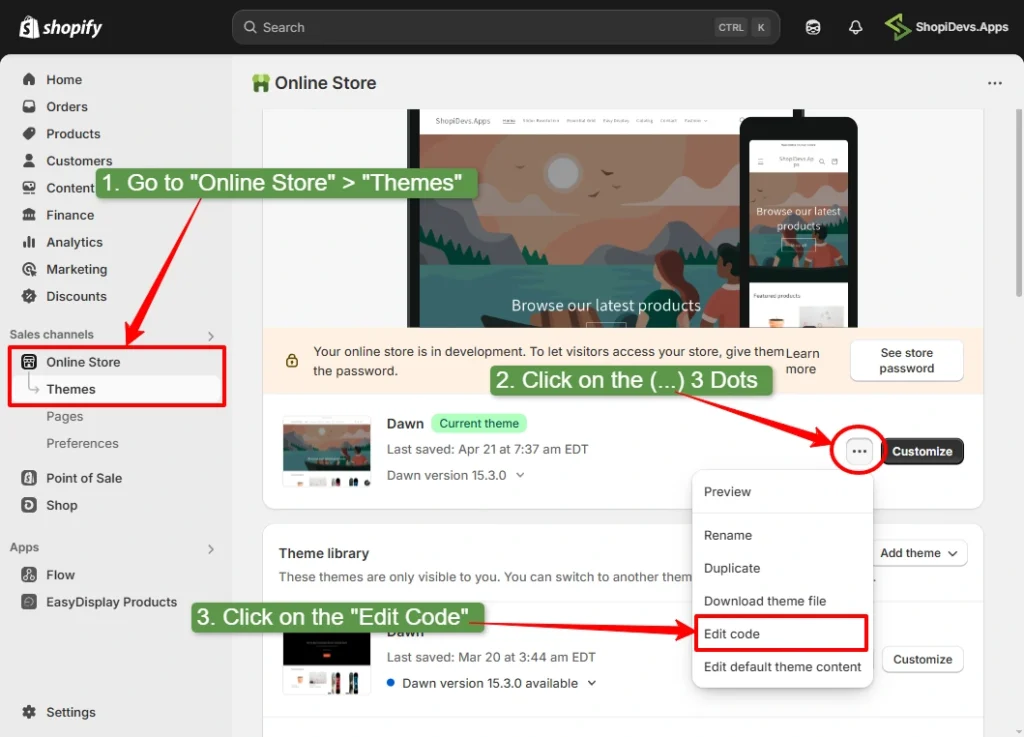
Step 2: Open theme.liquid and Add the Mobile CSS
In the left sidebar, expand the Layout folder and click theme.liquid. Scroll to the very bottom of the file, just above the </html> closing tag. Paste this CSS block:
<style>
@media screen and (max-width: 767px){
.header__search {
display: none;
}
}
</style>Paste it above</html>, not after it. Click Save.
This targets screens 767px wide or narrower. Desktop and tablet views are not affected.
Step 3: Save and Test on Mobile
Click Save. Open your storefront on a mobile device (or use your browser’s developer tools to simulate a mobile screen). The search icon should be gone on mobile while remaining visible on desktop.
Before you remove the icon, check whether your customers actually use search. If search drives conversions, hiding it could hurt sales. Consider whether the icon is the problem, or whether the search experience itself needs improvement.
How to Remove the Search Icon in Shopify Dawn Theme
Dawn is Shopify’s flagship free theme and the base for Online Store 2.0. It is built to be lightweight, but merchants frequently want to strip the default header search icon for cleaner brand layouts. Here is exactly how it works in Dawn.
The Dawn Theme Search Icon CSS Class
In Dawn, the search icon button in the header is controlled by the CSS class .header__icon--search in the Assets > base.css file. This is the same CSS method described in Method 1, and it works directly on Dawn without any modifications.
/* Dawn theme: remove search icon from header */ .header__icon–search { display: none; }
Where the Search Icon Lives in Dawn’s Liquid Code
For developers who want to remove the icon at the Liquid level, the search icon in Dawn is rendered in Sections > header.liquid via a snippet. The relevant render call looks for the header-search snippet in the Snippets folder (Snippets > header-search.liquid).
Deleting the content of that snippet or removing the render call from header.liquid gives you a permanent removal.
Dawn Theme vs. Older Shopify Themes
The .header__icon--search class is specific to Dawn and most Online Store 2.0 themes. If you are on an older theme like Debut, the CSS class name may differ. Common alternatives include .site-header__search-toggle or .header-search depending on the theme.
| Theme | CSS Class to Target | File Location |
|---|---|---|
| Dawn (OS 2.0) | .header__icon--search |
Assets > base.css |
| Sense (OS 2.0) | .header__icon--search |
Assets > base.css |
| Refresh (OS 2.0) | .header__icon--search |
Assets > base.css |
| Debut (legacy) | .site-header__search-toggle |
Assets > theme.css |
| Brooklyn (legacy) | .search-bar__input |
Assets > theme.css |
Not sure which CSS class your theme uses?
Right-click the search icon on your storefront, click Inspect, and look at the class attribute on the button or icon element. That is the exact class to target in your CSS.
Once you have organized your products on Shopify and set up your Shopify sub collections, a clean header becomes even more important. The search icon is a small detail, but it contributes to the overall visual hierarchy of your store. Removing it in Dawn or any theme is a five-minute change with a visible impact on how your header feels.
How to Show a Search Bar Instead of a Search Icon in Shopify
Removing the search icon does not mean removing the search experience. Many merchants replace the compact icon with a full inline search bar that sits directly in the header. This gives customers an always-visible input field instead of a two-click process (click icon, then type).
This approach is especially effective for stores with large inventories where search is a primary navigation tool. If you have invested in Shopify conversion rate optimization, improving search discoverability is a direct lever for reducing bounce and improving time-to-purchase.
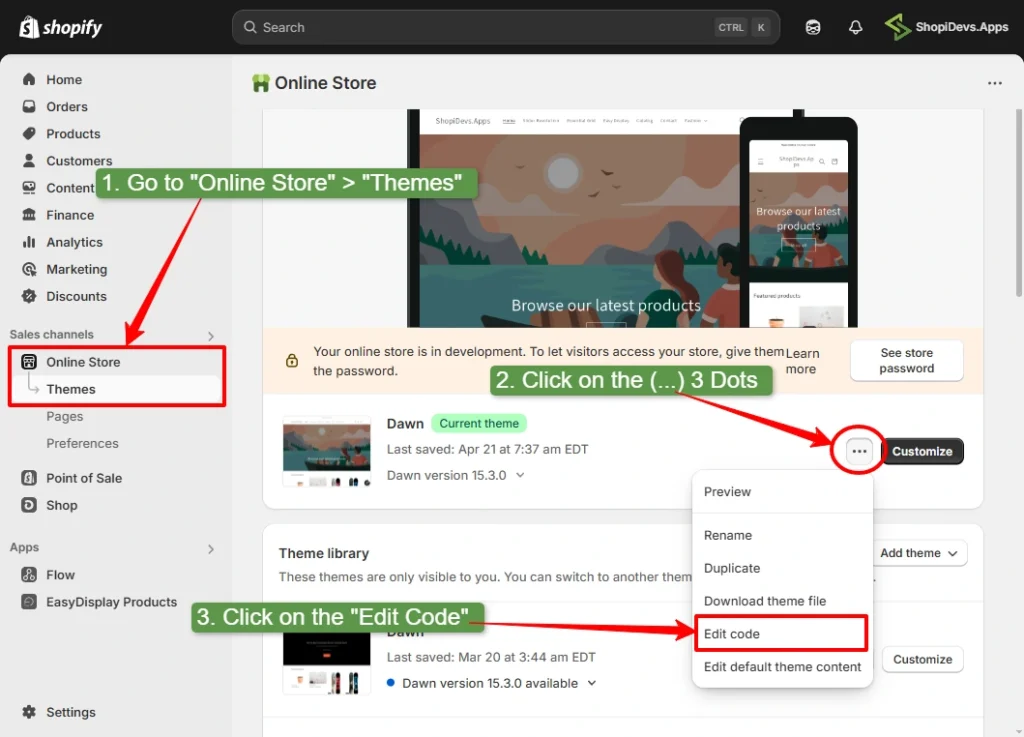
Step 1: Access Theme Code Editor
- Log in to your Shopify store admin dashboard.
- Click on the “Online Store > Themes > 3 Dots > Edit Code”
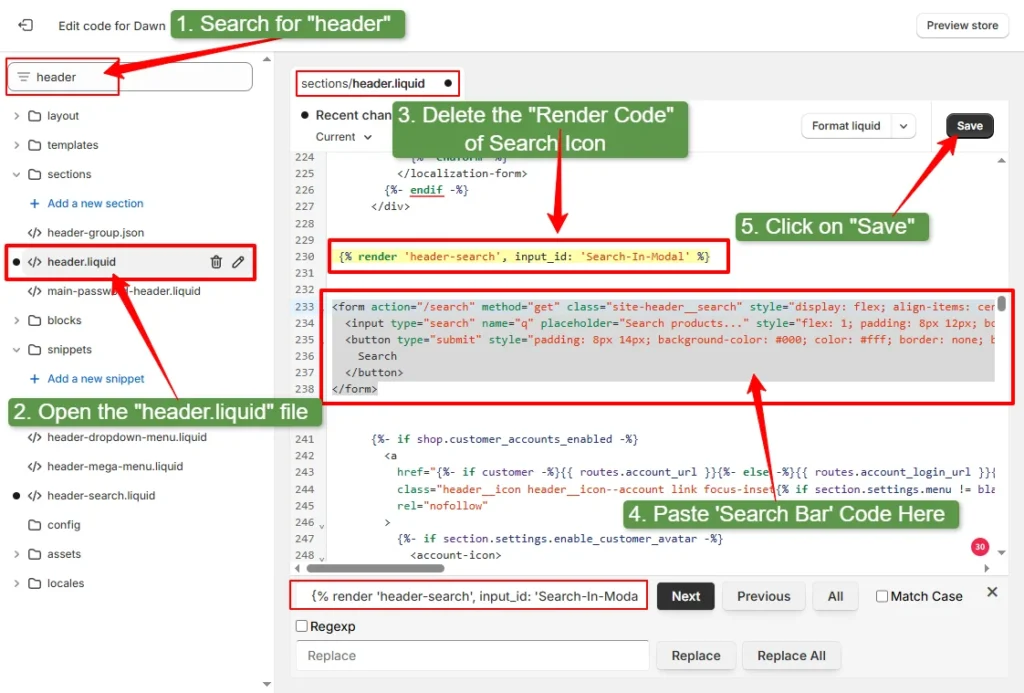
Step 2: Find the Search Icon Render Tag and Replace It
In the search bar, type header. Open the header.liquid file located inside the Sections folder and search for.
{% render 'header-search', input_id: 'Search-In-Modal' %}Replace that entire line with this search bar code:
<form action="/search" method="get" class="site-header__search" style="display: flex; align-items: center; gap: 8px; max-width: 300px; margin-left: 20px;">
  <input type="search" name="q" placeholder="Search products..." style="flex: 1; padding: 8px 12px; border: 1px solid #ccc; border-radius: 4px; font-size: 14px; width: 100%;">
  <button type="submit" style="padding: 8px 14px; background-color: #000; color: #fff; border: none; border-radius: 4px; cursor: pointer; font-size: 14px;">
    Search
  </button>
</form>Click Save. The screenshot below shows the replacement code in position.
Step 3: Save and Preview
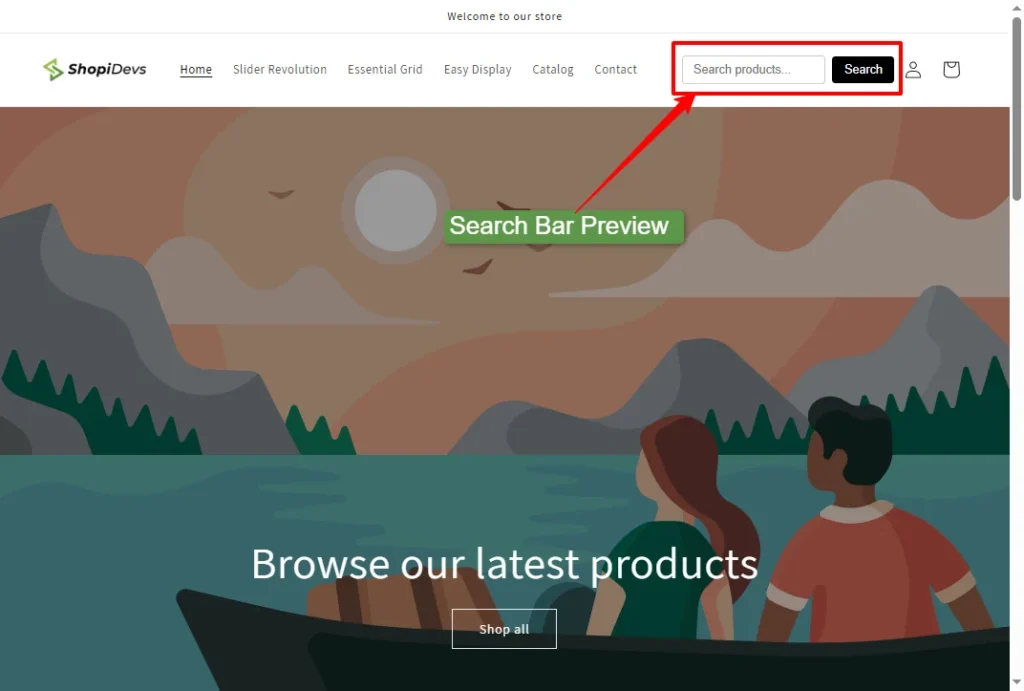
Click Save and preview your storefront. The header now shows an inline search bar instead of the icon. On mobile, the bar adjusts to fit the smaller viewport. If the layout looks off, adjust the CSS width or positioning in base.css.
An inline search bar works best for stores with 50+ products. For one-product Shopify stores, removing the search icon entirely (without replacing it) is the cleaner choice.
Boost Your Store’s Product Visibility
If you are tweaking your header to improve product discovery, EasyBoost can help. It is a Shopify app built by the ShopiDevs team that makes your products more visible through dynamic showcasing, product sliders, and smart display sections. A clean header is step one. EasyBoost handles the rest of the discoverability work.

EasyBoost: Product Showcase for Shopify
Add product sliders, featured collections, and dynamic display sections to your Shopify store without touching code. Built and maintained by the ShopiDevs team.
If you want to go further with your store design, Slider Revolution for Shopify gives you full creative control over your homepage and section layouts. See the full guide on how to design your Shopify store with Slider Revolution.
FAQs
How do I remove the search icon from my Shopify store?
Go to Online Store > Themes > Edit code > Assets > base.css. Scroll to the bottom and add: .header__icon--search { display: none; } then click Save. The icon disappears immediately and the change is reversible.
Where Is The Search Icon Code Located In Shopify Themes?
The search icon code is usually located inside a file called header-search.liquid (under the Snippets folder). If you haven’t found this file in your theme, you can check the header.liquid file.
How do I remove the search icon in the Shopify Dawn theme?
In Dawn, the search icon uses the class .header__icon--search. Open Assets > base.css and add .header__icon--search { display: none; } to the bottom of the file. For a permanent removal, go to Sections > header.liquid and delete the {% raw %}{% render 'header-search' %}{% endraw %} block.
What’s The Best Way For Beginners To Remove The Shopify Search Icon?
If you’re new to Shopify, I’d say go with the CSS method I have provided above. It’s the easiest and doesn’t mess with your theme files. But if you want a cleaner approach, you can remove the code directly (just make sure to back up your theme first).
What is the difference between hiding and deleting the search icon?
Hiding uses CSS (display: none) and is reversible. The code stays intact. Deleting removes the Liquid code from header.liquid or header-search.liquid permanently. The CSS method is safer for most merchants. Use code deletion only if you want zero trace of the icon in your theme files.
Can I hide the search icon on mobile only?
Yes. Add this to the bottom of base.css: @media screen and (max-width: 767px){ .header__search { display: none; } } This hides the icon on phones while keeping it visible on desktop and tablet.
Where is the search icon code in Shopify?
The visual CSS lives in Assets > base.css (class: .header__icon--search). The Liquid render code is in Sections > header.liquid or Snippets > header-search.liquid. Both locations control different aspects of how the icon appears.
Will removing the search icon break anything on my store?
Using the CSS method, nothing breaks. The underlying search functionality is still active. Customers can reach the search page via /search directly. Using the code deletion method, the icon is gone from the header, but the /search page still works unless you also remove it from navigation.
How do I bring the search icon back after hiding it?
If you used the CSS method, delete the .header__icon--search { display: none; } line from base.css and save. The icon returns instantly. If you deleted the Liquid code, restore from a theme backup (either the duplicate you created manually or through a backup app like Syncora).
Want Help Customizing Your Shopify Theme?
The ShopiDevs team specializes in Shopify theme customization, Liquid development, and conversion-focused store design. Whether you need a one-off fix or a full theme overhaul, we can help.

Jakaria is an SEO Content Writer in Shopify, Ecommerce, WordPress, and Tech Industry with 5+ years of experience. He specialises in developing engaging, helpful content by simplifying complex topics into an amazing story for B2B, SaaS, and Shopify businesses. He’s also passionate about staying updated on growth marketing strategies and Shopify trends.




La prochaine fois essayez de mettre des photos encore plus floues pour qu’on puisse encore moins voir.